


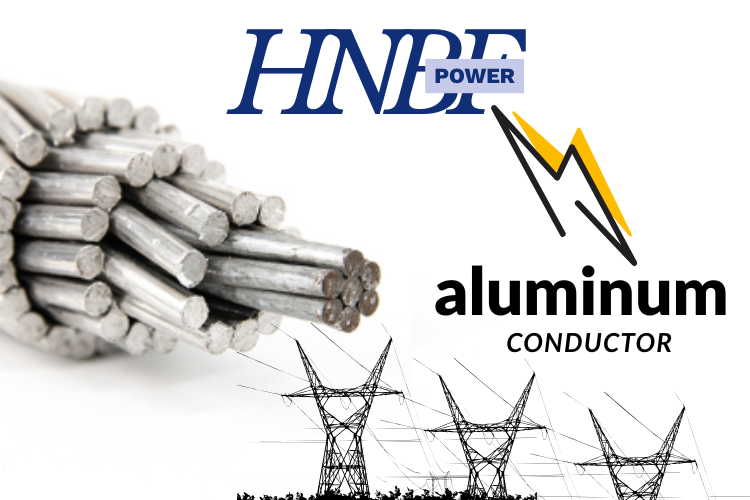
In today’s rapidly expanding energy infrastructure, selecting the right conductor material is critical for ensuring efficiency, reliability, and cost-effective power transmission. Among various options used in overhead electrical networks, the aluminum conductor has become one of the most widely adopted solutions for utilities, EPC contractors, and power grid developers.
Due to its lightweight nature, high conductivity, and corrosion resistance, aluminum conductors play a crucial role in overhead transmission and distribution systems worldwide. From rural electrification projects to large-scale grid modernization initiatives, engineers and procurement teams consistently rely on aluminum-based conductors to deliver stable electrical performance.
As a global manufacturer of power transmission products, HNBF Power supplies high-quality aluminum conductors designed to meet the demanding requirements of utility projects and industrial power networks.
What Is an Aluminum Conductor?
An aluminum conductor is an electrical conductor made primarily from aluminum wires that are stranded together to carry electrical current efficiently across power lines. These conductors are commonly used in overhead power transmission and distribution systems due to aluminum’s excellent electrical conductivity relative to its weight.
Compared to copper, aluminum offers several practical advantages:
-
Lower weight for easier installation
-
Lower material cost
-
High corrosion resistance
-
Good conductivity performance
-
Suitable for long-distance transmission
Because of these benefits, aluminum conductors are widely used in overhead line projects across utility grids, substations, and industrial power networks.
Why Aluminum Is Preferred for Power Transmission
1. Lightweight and Easy Installation
Aluminum weighs approximately one-third as much as copper. This lighter weight allows longer spans between transmission towers and reduces mechanical load on support structures. For engineers designing overhead transmission lines, this advantage significantly reduces infrastructure costs.
2. Excellent Conductivity-to-Weight Ratio
Although copper has slightly higher conductivity, aluminum provides an excellent conductivity-to-weight ratio, making it highly efficient for long-distance electricity transmission.
3. Cost-Effective for Large Projects
Large-scale power transmission projects require thousands of kilometers of conductor material. Aluminum’s lower cost compared to copper makes it the preferred choice for utilities seeking reliable yet economical solutions.
4. Corrosion Resistance
Aluminum naturally forms a protective oxide layer that prevents further corrosion. This makes aluminum conductors particularly suitable for outdoor environments, including coastal or industrial regions.
Common Types of Aluminum Conductors
Power utilities and EPC contractors typically choose from several types of aluminum conductors depending on application requirements.
AAC – All Aluminum Conductor
AAC conductors consist entirely of aluminum strands. They offer excellent conductivity and are commonly used in short-distance distribution lines, particularly in urban areas where mechanical strength requirements are moderate.
Key advantages include:
-
High electrical conductivity
-
Good corrosion resistance
-
Ideal for distribution networks
AAAC – All Aluminum Alloy Conductor
AAAC conductors are made from aluminum-magnesium-silicon alloy, providing higher mechanical strength compared to pure aluminum conductors.
They are commonly used in:
-
Medium-span transmission lines
-
Coastal regions
-
Areas with moderate mechanical loads
ACSR – Aluminum Conductor Steel Reinforced
ACSR combines aluminum strands with a steel core, offering exceptional tensile strength. This design allows the conductor to support longer spans and heavier loads.
Typical applications include:
-
High-voltage transmission lines
-
Long-distance power networks
-
Mountainous or high-wind environments
ABC – Aerial Bundled Cable
In distribution systems, aluminum conductors are also used in Aerial Bundled Cable (ABC). These insulated aluminum conductors improve safety and reduce power losses in urban and residential distribution networks.
Applications of Aluminum Conductors
Because of their efficiency and versatility, aluminum conductors are used in a wide range of power infrastructure applications.
Power Transmission Lines
High-voltage transmission lines rely heavily on aluminum-based conductors to transport electricity over long distances from power plants to substations.
Power Distribution Networks
In urban and rural distribution systems, aluminum conductors provide reliable power delivery while minimizing installation costs.
Renewable Energy Projects
Solar farms and wind power plants require efficient grid connection systems. Aluminum conductors are widely used to link renewable energy facilities with utility grids.
Industrial Power Systems
Large manufacturing facilities and industrial plants use aluminum conductors in overhead distribution networks to maintain stable electricity supply.
How to Choose the Right Aluminum Conductor
Selecting the appropriate aluminum conductor depends on several engineering factors.
Electrical Load Requirements
The conductor must handle the required current capacity without excessive heat generation or energy loss.
Mechanical Strength
Transmission lines exposed to wind, ice loading, or long spans require conductors with higher tensile strength, such as ACSR or AAAC.
Environmental Conditions
Coastal areas, high humidity environments, or industrial zones may require conductors with enhanced corrosion resistance.
Compliance With International Standards
Reliable manufacturers ensure their aluminum conductors meet global standards such as ASTM, IEC, BS, and DIN, ensuring safety and compatibility for utility projects worldwide.
Why Choose HNBF Power Aluminum Conductors
For utilities and EPC contractors, choosing a trusted manufacturer is as important as selecting the right conductor type.
HNBF Power is a global manufacturer specializing in overhead conductors and power cable solutions, including:
-
AAC conductors
-
AAAC conductors
-
ACSR conductors
-
Aerial bundled cables (ABC)
-
LV power cables
-
Concentric cables
With advanced manufacturing technology and strict quality control, HNBF Power ensures each conductor meets international electrical and mechanical performance standards.
Key advantages of working with HNBF Power include:
-
Consistent product quality for large infrastructure projects
-
Custom conductor specifications based on project requirements
-
Global supply capability for utilities and EPC contractors
-
Technical support for engineering and procurement teams
The Future of Aluminum Conductors in Modern Grids
As power demand continues to grow worldwide, grid infrastructure must become more efficient, reliable, and cost-effective. Aluminum conductors will remain a critical component of modern transmission and distribution systems due to their performance, affordability, and adaptability.
In addition, smart grid upgrades and renewable energy integration are increasing demand for advanced conductor technologies capable of supporting higher loads and improved grid stability.
Manufacturers like HNBF Power continue to innovate in conductor design to meet the evolving needs of global power utilities.
FAQs About Aluminum Conductors
1. Why are aluminum conductors widely used in power transmission?
Aluminum conductors are widely used because they provide an excellent balance of conductivity, lightweight design, corrosion resistance, and cost efficiency for large-scale power networks.
2. What is the difference between AAC, AAAC, and ACSR conductors?
AAC uses pure aluminum strands, AAAC uses aluminum alloy for improved strength, and ACSR includes a steel core for high tensile strength in long-span transmission lines.
3. Are aluminum conductors suitable for high-voltage transmission?
Yes. Aluminum conductors, particularly ACSR and AAAC types, are commonly used for high-voltage and extra-high-voltage transmission lines worldwide.
4. Do aluminum conductors require special maintenance?
Generally, aluminum conductors require minimal maintenance because aluminum naturally resists corrosion. However, routine inspections are recommended for long-term grid reliability.
5. Can aluminum conductors be customized for specific projects?
Yes. Manufacturers like HNBF Power provide customized conductor designs based on voltage level, span length, environmental conditions, and project requirements.
Contact HNBF Power for High-Quality Aluminum Conductor Solutions
If you are planning a power transmission or distribution project, selecting the right aluminum conductor is essential for long-term efficiency and reliability.
HNBF Power provides high-quality overhead conductors and cable solutions tailored to the needs of utilities, EPC contractors, and industrial power projects worldwide.
Contact HNBF Power today to discuss your project requirements and receive customized aluminum conductor solutions designed for modern power infrastructure.

 English
 Arabic
 French
 Spanish
 Portuguese
 Deutsch
 Turkish
 Dutch
Dutch
 Italiano
 Russian
 Romaian
 Portuguese (Brazil)