


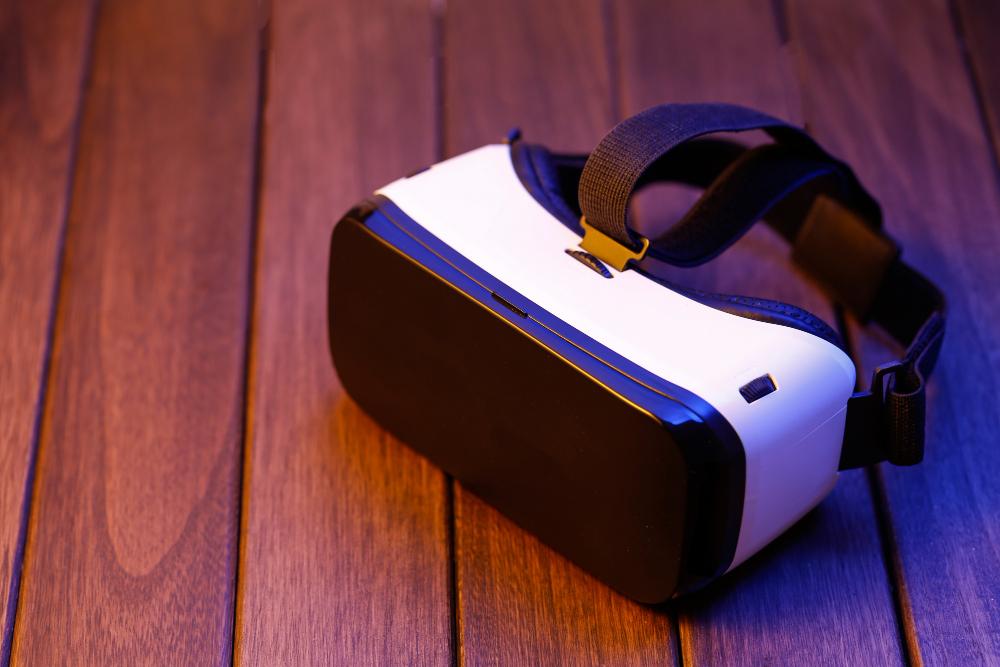
In the optoelectronics and XR (Extended Reality) sectors, we have reached a critical inflection point. For nearly a decade, the primary barrier to mass enterprise adoption of Virtual Reality (VR) hasn't been the software or the processing power—it has been the ergonomics.
Traditional VR headsets rely on Fresnel lenses. While cost-effective, these lenses require a significant physical gap between the display panel and the lens to achieve the necessary focal length. This results in the "shoe-box" design—headsets that are front-heavy, causing neck strain and "VR sickness" during extended industrial training or remote collaboration sessions. For B2B stakeholders, this bulk translates directly into lower user engagement and reduced ROI on spatial computing initiatives.
To break this cycle, the industry is shifting toward the Pancake optical module.
The Challenge: The Fresnel Limitation
To understand why the Pancake optical module is a necessity, we must first look at the failures of the status quo:
-
Fixed Focal Distance: Fresnel optics require a large internal volume, making headsets protrude 3–4 inches from the face.
-
Optical Artifacts: "God rays" and chromatic aberration (color fringing) are inherent to Fresnel ridges, distracting users in high-detail medical or engineering simulations.
-
Peripheral Blur: Traditional lenses often have a narrow "sweet spot," meaning users must move their entire head rather than just their eyes to see clearly.
What is a Pancake Optical Module?
The name "Pancake" refers to the thin, flat profile of the lens stack. Unlike a single thick lens, a Pancake optical module uses a series of folded optics. By utilizing circular polarization and semi-reflective mirrors, the light from the display is reflected back and forth within the lens stack multiple times before reaching the eye.
This "folding" of the light path allows the physical distance between the display (typically a Micro OLED or Fast-LCD) and the eye to be reduced by up to 50% or more.
Addressing the Top 3 Pain Points in B2B VR Development
1. Radical Thinning of the Headset Chassis
The most immediate benefit of the Pancake optical module is the reduction in Z-depth. By folding the light, the optical engine can be compressed into a module less than 20mm thick. This allows for "goggles-style" form factors. For B2B applications in hazardous environments or cramped cockpits, a slim profile isn't just an aesthetic choice—it’s a safety and mobility requirement.
2. Eliminating Visual Distortion and "God Rays"
Because Pancake lenses use smooth, high-precision aspheric surfaces rather than the ridged structure of Fresnel lenses, they virtually eliminate "god rays." Furthermore, the use of polarized light paths significantly improves image contrast and edge-to-edge clarity. In a professional setting—such as a surgeon reviewing a 3D heart model—this level of visual fidelity is non-negotiable.
3. Accommodating Diopter Adjustment
One of the hidden costs in B2B VR deployment is accommodating users with glasses. The compact nature of the Pancake optical module allows for the integration of mechanical diopter adjustment. Users can simply turn a dial on the lens to match their prescription, eliminating the need for bulky glasses spacers or expensive custom inserts.
The ROI of Shifting to Pancake Optics
From a B2B procurement perspective, the higher initial unit cost of a Pancake optical module is offset by the longevity and versatility of the hardware.
| Performance Metric | Fresnel Optics | Pancake Optical Module |
| Physical Depth | 40mm – 60mm | 15mm – 25mm |
| Image Clarity | Center-weighted | Edge-to-Edge |
| Weight | Heavy / Front-loaded | Light / Balanced |
| Ghosting/God Rays | High | Near-Zero |
| Light Efficiency | High (~90%) | Low (~10-25%) |
The Efficiency Trade-off
It is important to note a critical technical challenge: light loss. Because the light reflects multiple times within the Pancake stack, roughly 75% to 90% of the initial luminance is lost.
-
The Solution: To solve this, B2B manufacturers must pair Pancake modules with ultra-high-brightness displays, specifically Micro OLED (OLEDoS). These displays provide the "nits" required to punch through the optical stack while maintaining deep blacks.
Overcoming the "Ghosting" Hurdle
The primary manufacturing challenge with the Pancake optical module is ghosting caused by secondary reflections (stray light). Solving this requires semiconductor-grade precision in the application of anti-reflective (AR) coatings and the alignment of polarizing films.
In 2026, we are seeing the emergence of Vacuum Bonding techniques that eliminate the air gaps between lens elements, further reducing internal reflections and improving the overall Modulation Transfer Function (MTF).
The Path Forward: Polarization Innovation
As we look toward 2027, the innovation in Pancake modules is moving toward Liquid Crystal Lenses integrated into the stack. This will allow for "Varifocal" optics, where the lens can electronically change focus based on where the user is looking (eye-tracking), finally solving the vergence-accommodation conflict (VAC) that causes eye strain in VR.
Conclusion
The Pancake optical module is the definitive answer to the ergonomic hurdles that have held back the enterprise VR market. By choosing a folded-optics architecture, you are investing in a future where spatial computing is as comfortable as wearing a pair of high-end sunglasses.

 English
 Arabic
 French
 Spanish
 Portuguese
 Deutsch
 Turkish
 Dutch
Dutch
 Russian
 Romaian
 Portuguese (Brazil)
 Tiếng Việt